EAGER
National Science Foundation Award #2335751
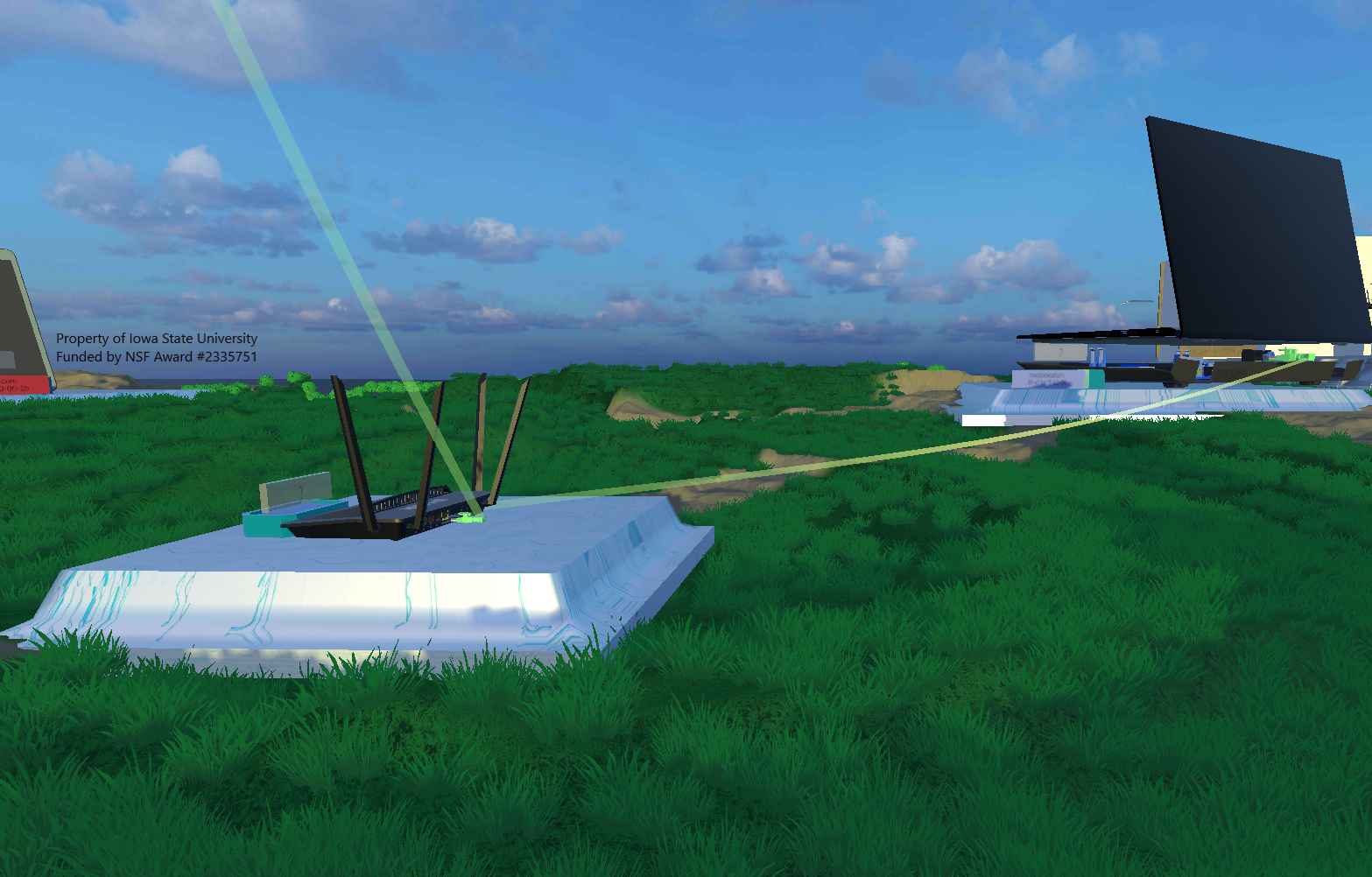
This project is a current work in progress, and is being made with using a combination of Unity, Blender, and OpenXR.
I worked on this project as a Graduate Research Assistant at Iowa State University. We worked in collaboration with the students and teachers of Storm Lake, Iowa, to build an XR Game to engage students with Cybersecurity concepts.
Storm Lake is a rural meatpacking community in Iowa, where the majority of residents are families of immigrants. The culture in this small town is very tight-knit, with some students expressing reservations regarding leaving the town to pursue career opportunities or attend secondary education. Most students prefer to live close by to their families, with many students pursuing careers in education or nursing through the nearby community college.
.png)
.png)
.png)
.png)
.png)
.png)
In my role, I was primarily an environment and game developer, but also assisted with 3D modeling and UI/UX development. I was responsible specifically for a scene that I conceptualized in collaboration with a team of five graduate students. For this game, we wanted to create an aesthetic that was inviting, bright and futuristic. After creating several environments for experimentation, we used Solarpunk aesthetics to communicate a futuristic, collaborative and sustainable environment.
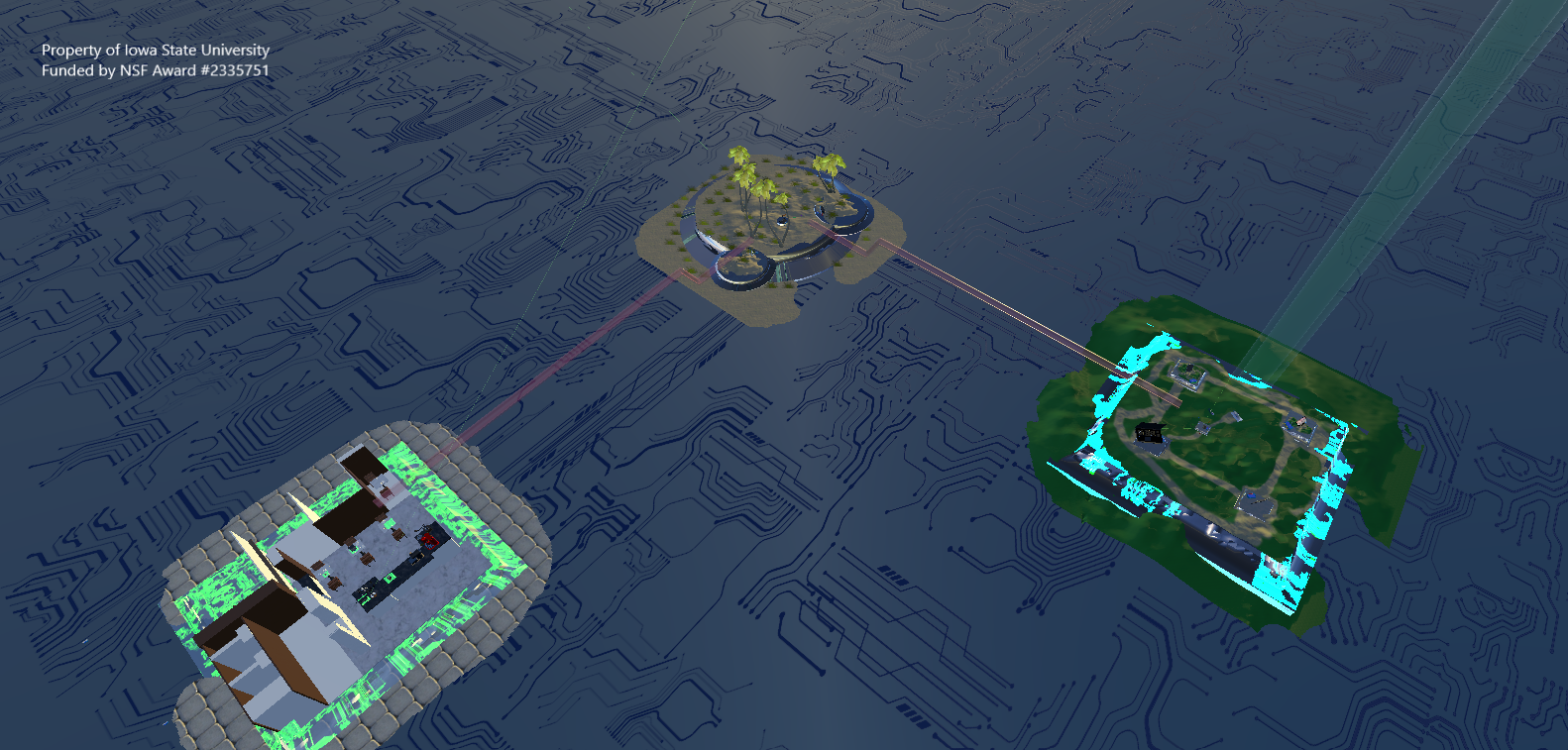
In order to create this environment, we had to 3D Model many different systems and materials. I was responsible for creating custom 3D Modeled assets that spoke the same visual language as the assets we had selected for the foliage in and around the environmement. I used Blender to 3D Model platforms, ethernet cords, etc. I collaborated with Hila Sabouni and Mustafa Kilinc who are trained in 3D Modeling processes in Architecture Design. Although the scene's primary functionality was mapped as a simple desktop game using keyboard input, I also used OpenXR to add VR functionality in this environment.
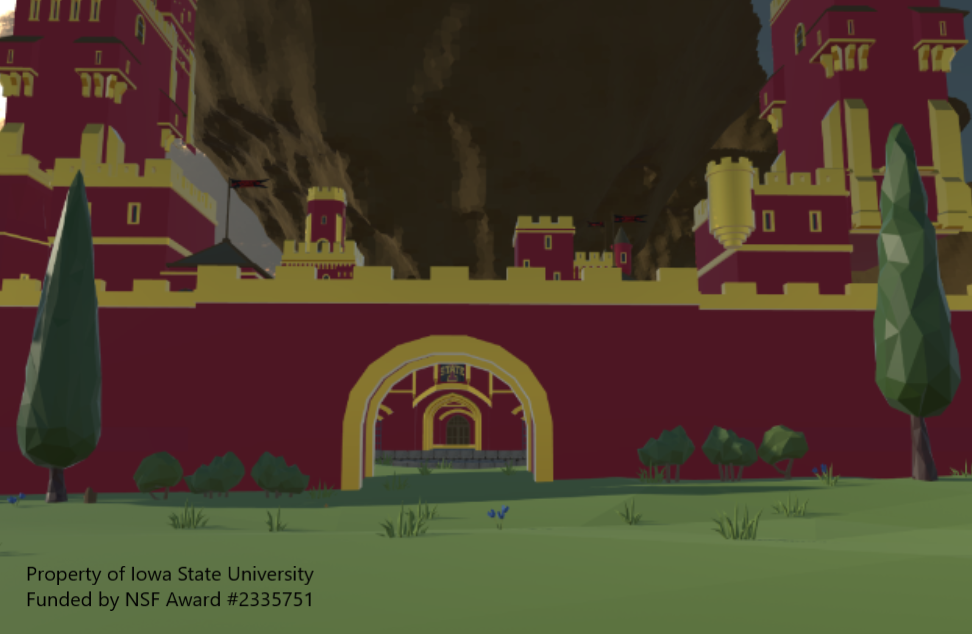
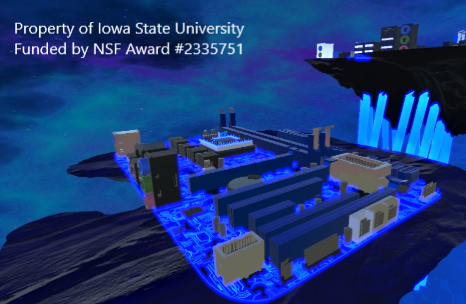
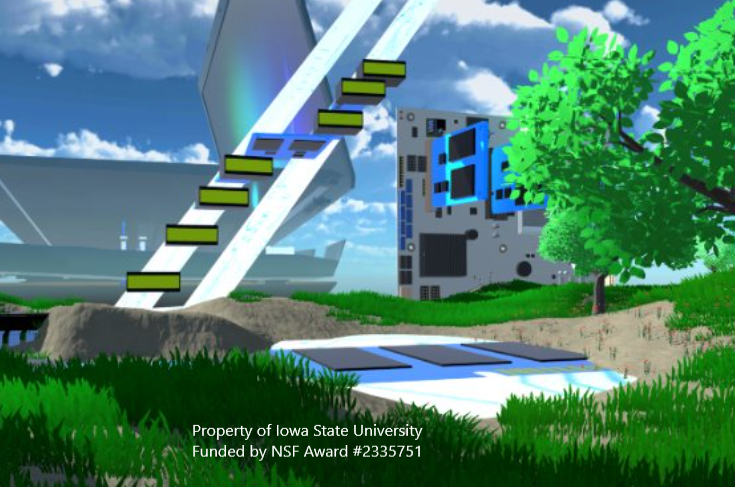
I also played a role in refining the UI used in the environment. To accomplish this, I collaborated with my colleague Mustafa Kilinc to translate Figma wireframes into a Unity Environment. We also conducted extensive research to select a modality to launch the VR environment into. We optimized the system for both hand-tracking and remote-controlled environments.
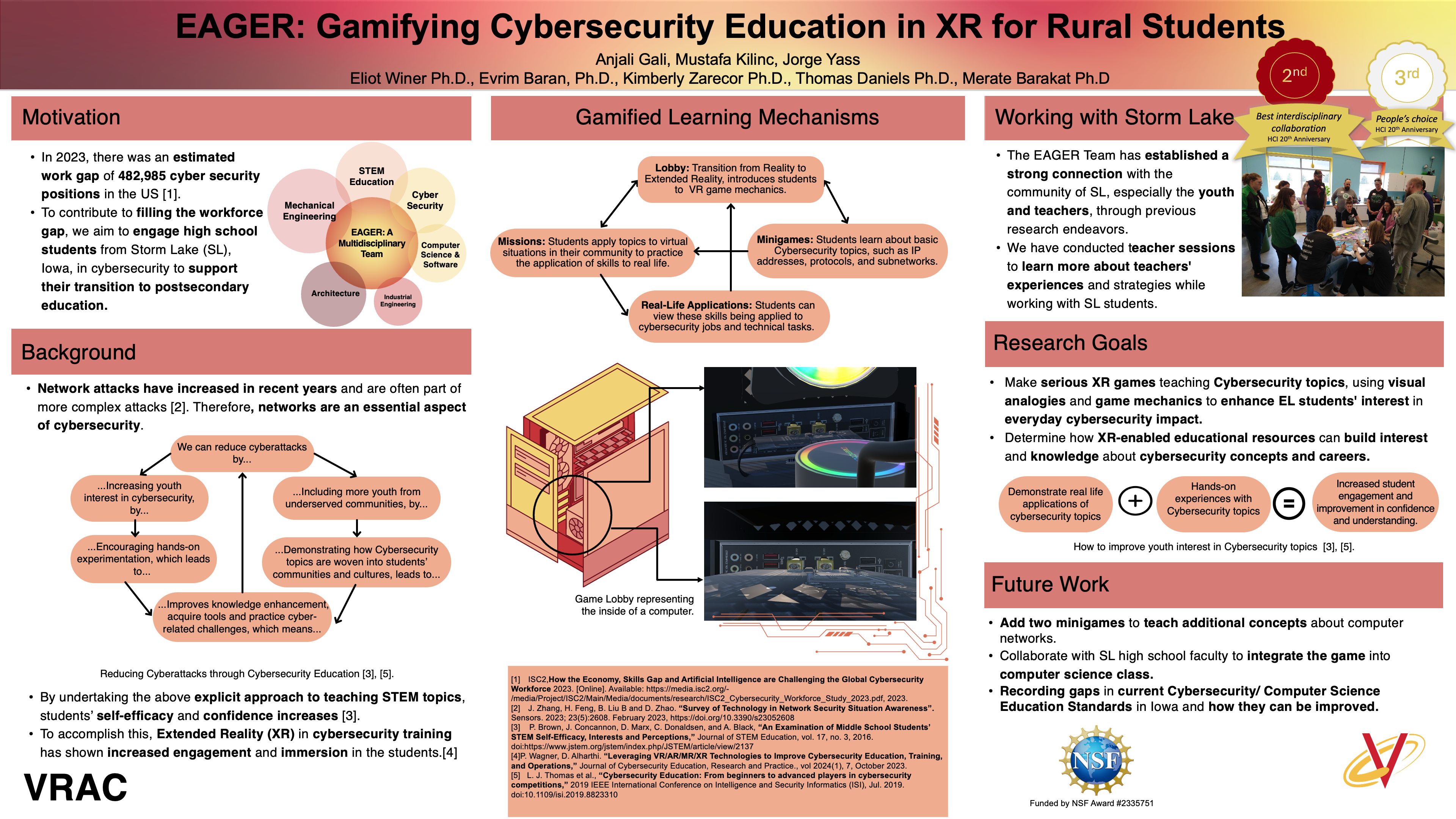
For our contributions, Mustafa, Jorge and I won three awards for a poster we presented on our work. We won Best interdisciplinary collaboration, 2nd Place, Best professional presence, 2nd Place, People’s choice, 3rd Place.

National Science Foundation Award #2335751