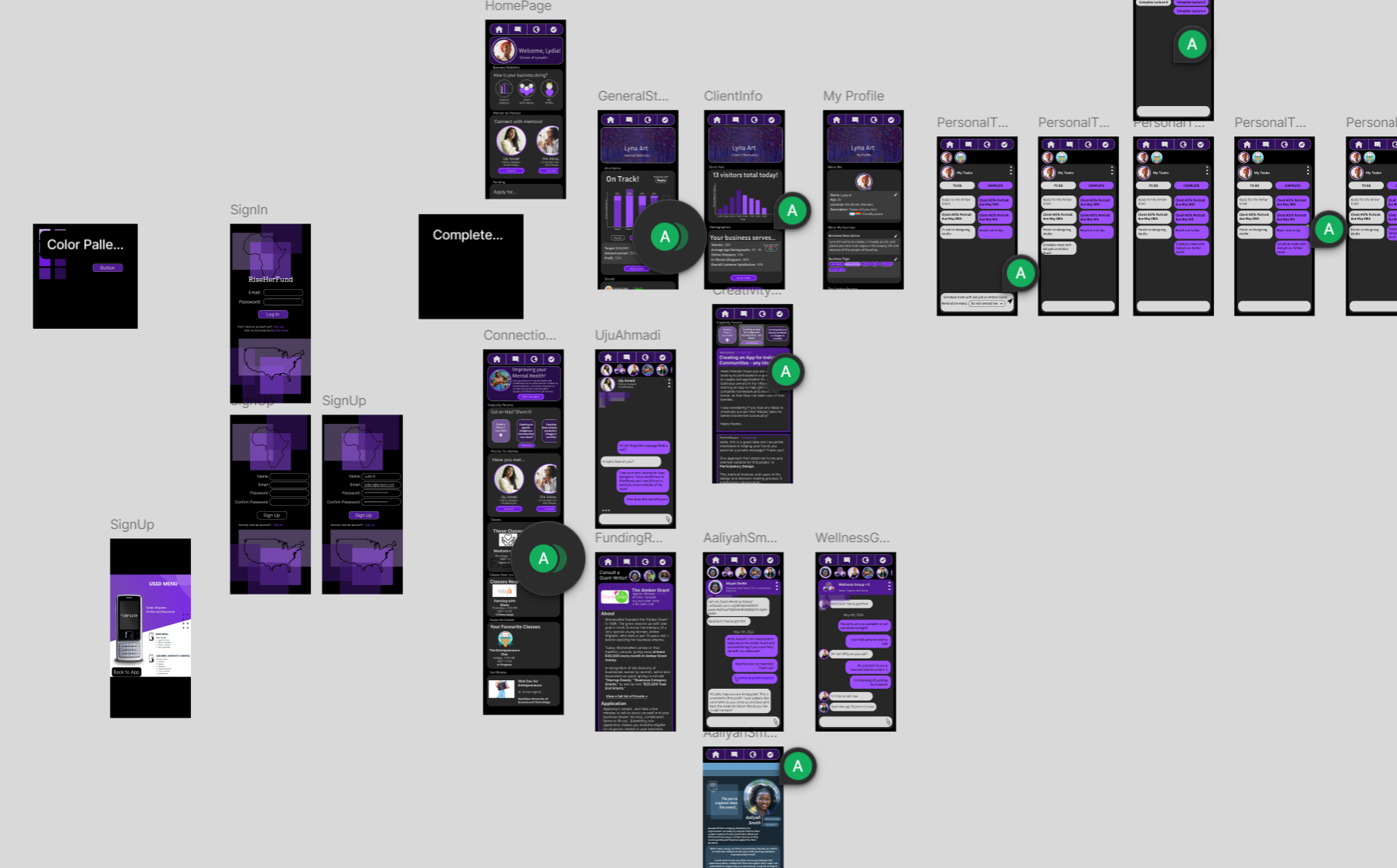
RiseherFund
This project was made as part of a team of five for a class project.
I had the opportunity to work in collaboration with two team members of Iowa State University (Heliya A. and Esther K.) and the Namibia University of Science and Technology (Paulina S and Elikkan R.). This project was inspired by the unique experiences and challenges that one of our team members experienced as a female African entrepreneur
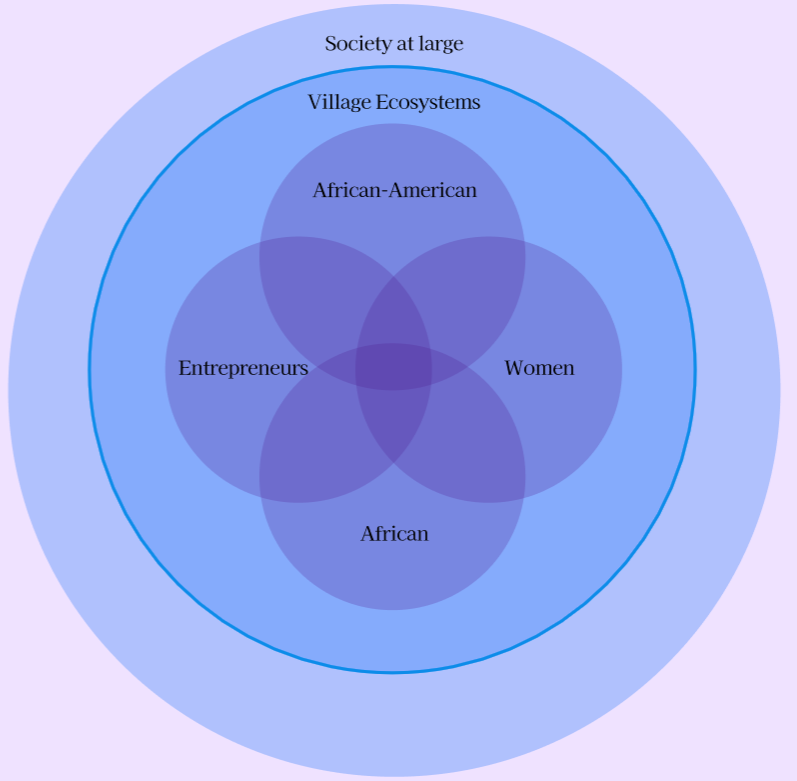
Black women business owners who apply for funding face a 3x higher rejection rate than that of white business owners. If their entrepreneurs were mentored, 70% of small businesses survive longer than five years (double the rate of those who were not mentored), but many female African/African American entrepreneurs struggle to find mentors.
As a team, we wanted to use the value-design methods to approach this problem and design a solution.
TThe primary research question we aimed to answer was: How can we enhance the success and sustainability of female African/African American entrepreneurs through targeted support and resources? We also wanted to answer the question of: How can we ensure that the female African/African American entrepreneurs are not worried about having limited access to resources due to the gender equality in their area?
During the course of this class, we learned how to employ LUMA human-centered design methods. We specifically chose to use four methodologies:
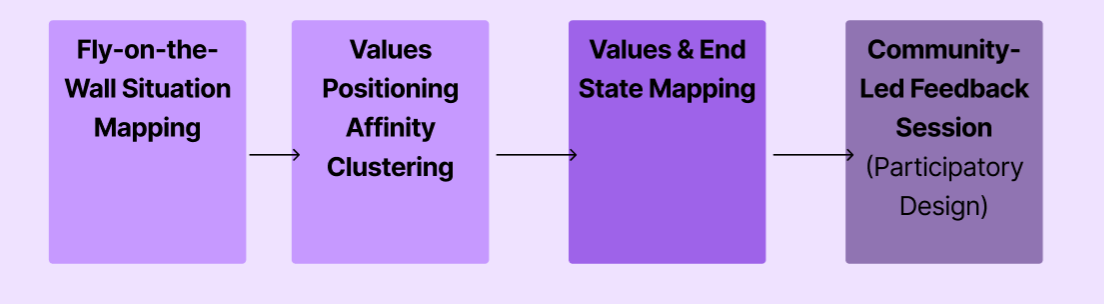
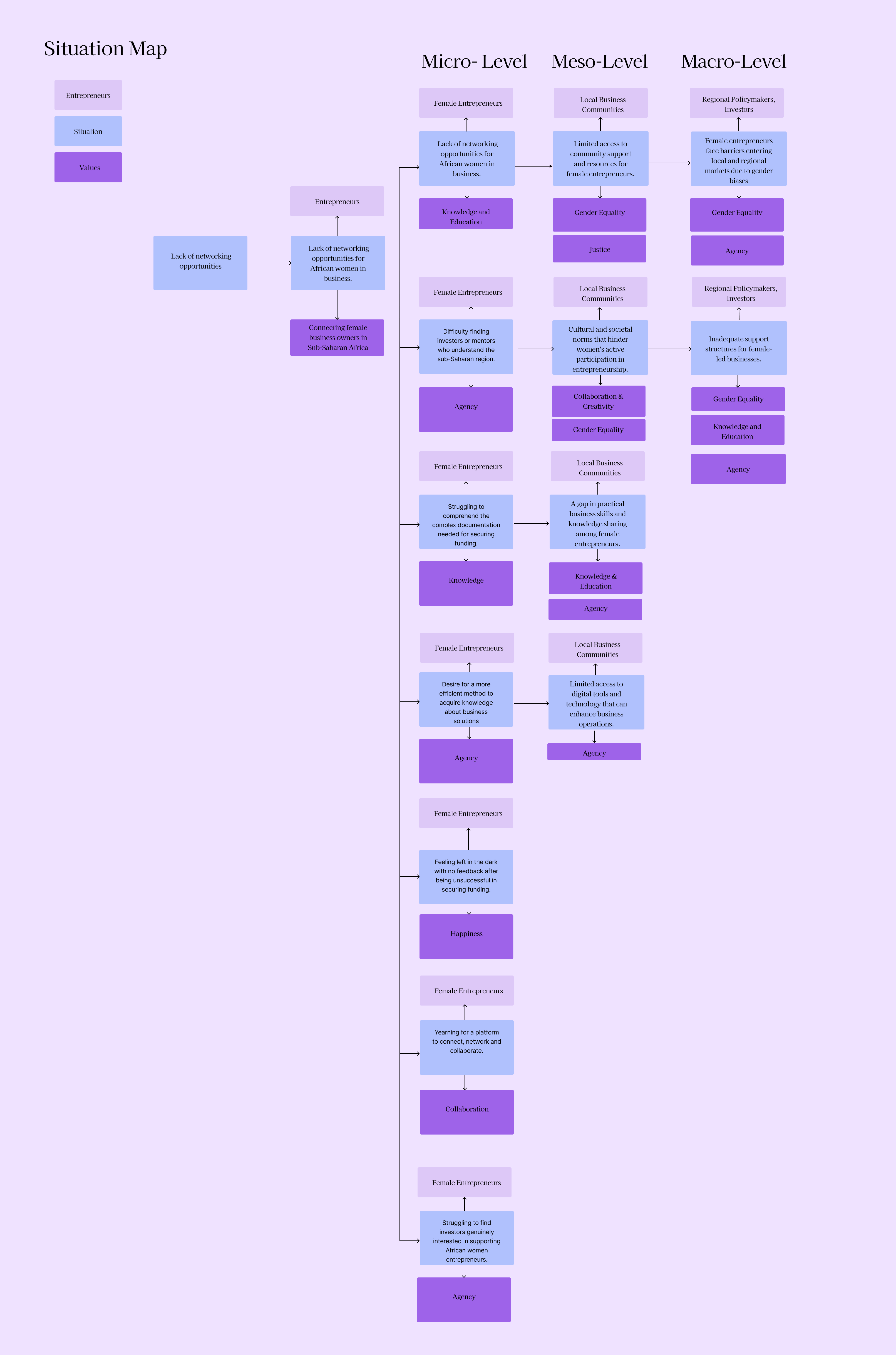
Fly on the Wall Situational Mapping helped us position ourselves in various settings where the entrepreneurs typically operate. We engaged in conversations with female African/African American entrepreneurs to have a better understanding of their motivations, challenges , and the values they hold central to their businesses. Our participants identified these values: Agency, Gender Equality & Justice, Knowledge & Education, Collaboration & Creativity, Happiness, and Health & Well-being. Lastly, we ensured that the situation maps accurately reflect both micro/macro perspectives
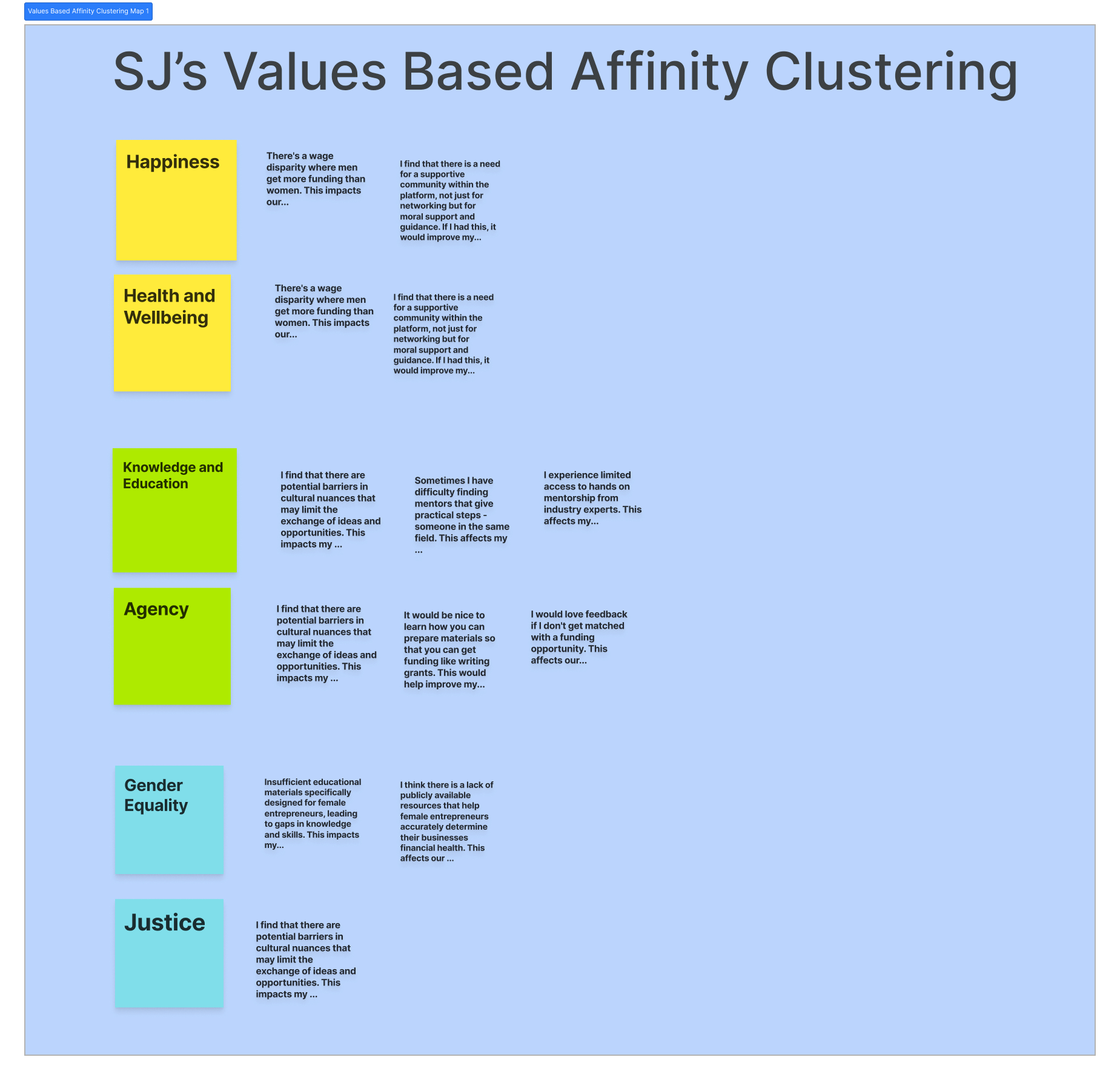
We also used Values Based Affinity Clustering to help us determine some of the similarities and differences between participant's experiences in both the US and Africa. This methodology, per the LUMA Institute, helps researchers "converge on sharp purpose to achieve common ground, place similar thoughts in proximity, discuss and rearrange thoughts as groupings emerge, foster strong ties within the group to view similarities and patterns. We also used Values and End-State Mapping to help us understand what the end goals for many of our participants look like to provide context behind certain actions they take to achieve that particular goal. We adjusted these method based on the needs of our users to ensure they could complete this activity asynchronously. This was after communicating and fully understanding the needs of our stakeholders.
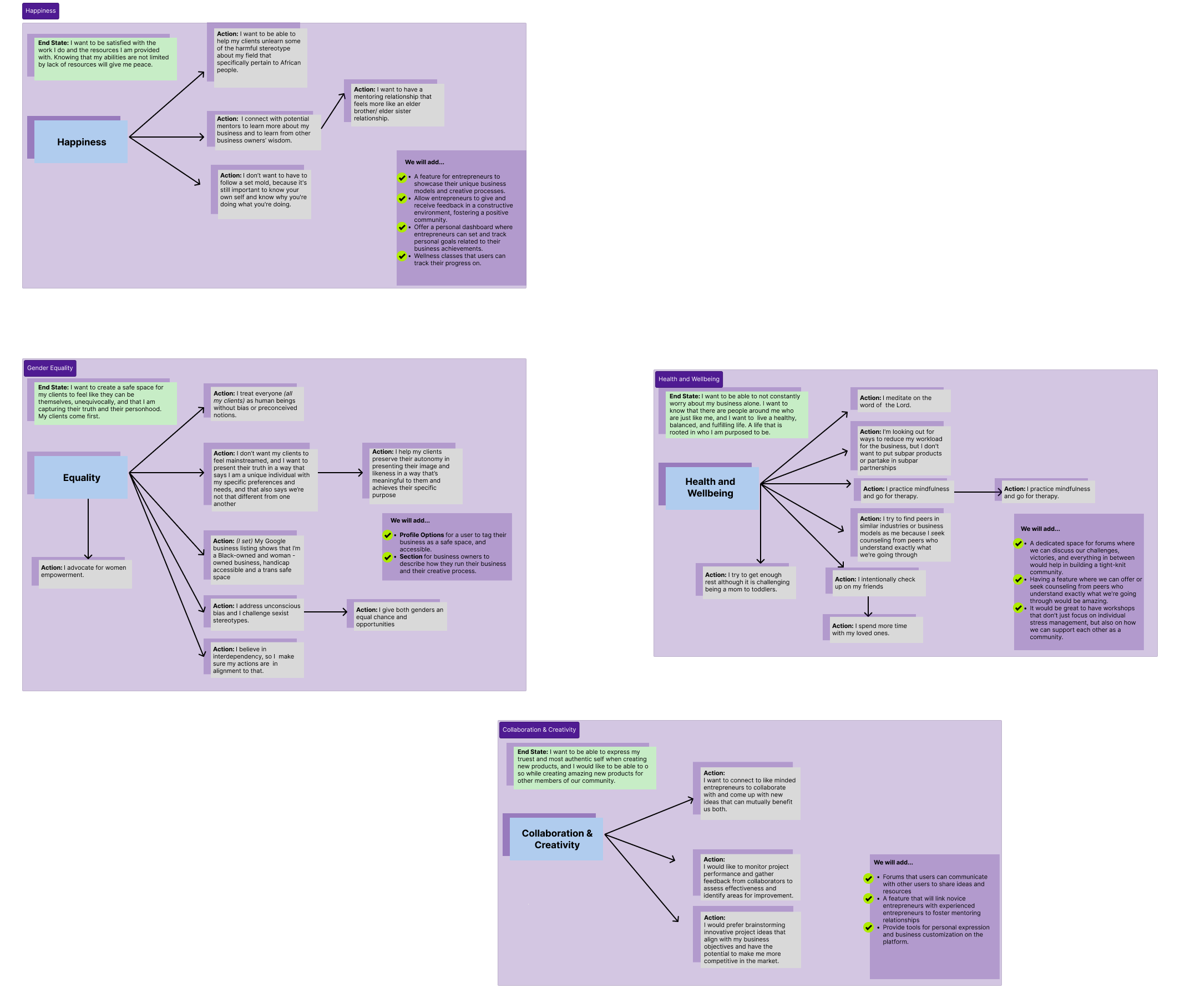
The Values and End-State Mapping methodology directly informed the creation of our wireframe, and my role as a part of the team was to create the wireframe.